


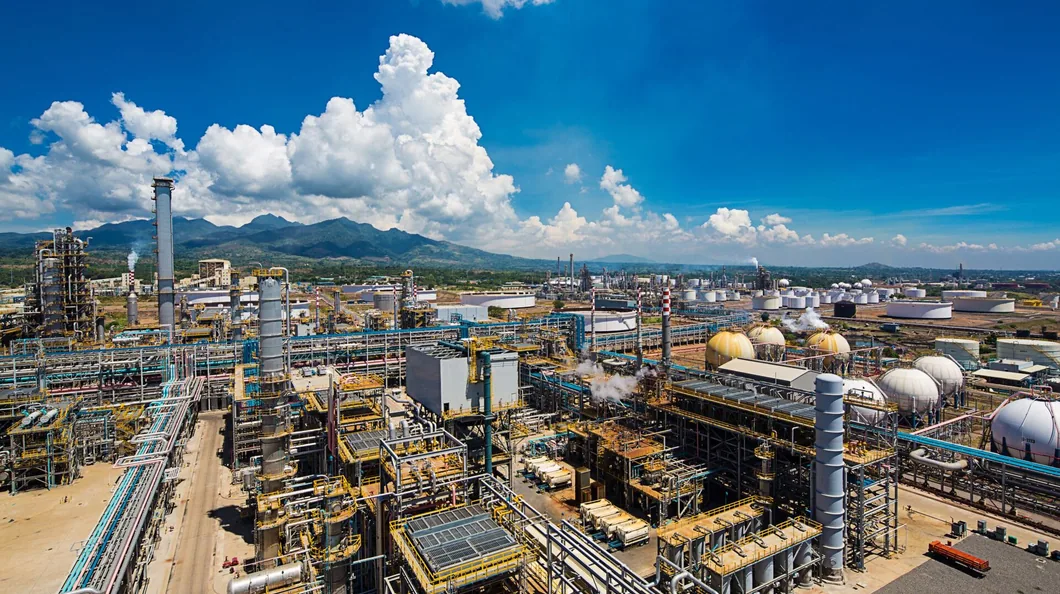
At a glance
Which area is which zone?
The table below shows the typical classification seen in this industry; the exact boundaries depend on ventilation, release sources and pressure and are set in your site's explosion protection document. For the zone concepts in detail, see our article on Zone 0, 1, 2 and 20, 21, 22.
| Area | Typical zone | Note |
|---|---|---|
| Storage tank interior (vapour space) | Zone 0 | Continuous explosive atmosphere; only Ga / category 1 equipment inside. |
| Around tank vents | Zone 1Zone 2 | Zone 1 close to the vent, Zone 2 beyond. |
| Inside the tank bund | Zone 2 | Risk of overfill and leaks; low points can be Zone 1. |
| Pumps, compressors, valve stations | Zone 1Zone 2 | Open, well-ventilated areas are mostly Zone 2; enclosed compressor houses and the area near seals are Zone 1. |
| Tanker loading / unloading | Zone 1Zone 2 | Zone 1 around the filling point. |
| Wellhead and manifold | Zone 1Zone 2 | Depending on the distance to release points. |
| Oil separators (API), drain pits | Zone 1 | Because of hydrocarbon vapour above the surface. |
| Control room, substation | Safe area | Kept outside the hazardous area by pressurisation or distance. |
Gases on site and the classes they need
Rule of thumb: the most demanding gas on site decides. Where hydrocarbons and H₂S are present, IIB, T3 or better is enough; in hydrogen units (reformer, hydrocracker) choose equipment certified IIC or at least IIB+H2. A more demanding class can always be used in an easier atmosphere.
Product groups for this industry
The links open each category with the Zone 1 + IIB filter; you can change the filter to suit your site.
Lighting
Floodlights, ceiling and linear LED luminaires for compressor houses and tank farms.
Zone 1IIB30 productsView products →Control stations
Start-stop, emergency stop and selector switch control stations.
Zone 1IIB12 productsView products →Junction and distribution boxes
Ex d and Ex e terminal boxes and distribution panels.
Zone 1IIB17 productsView products →Cable glands
Armoured / unarmoured, Ex d and Ex e entries; blanking plugs and reducers.
Zone 1IIB7 productsView products →Conduit fittings
Sealing fittings, elbows, nipples and unions for conduit systems.
Zone 1IIB12 productsView products →Plugs and sockets
Interlocked plug and socket sets for maintenance points.
Zone 1IIB7 productsView products →Frequently used in this industry


What to check when selecting
- The equipment category must suit the zone: at least 2 G (Gb) for Zone 1 and 3 G (Gc) for Zone 2.
- The temperature class follows the gas with the lowest ignition temperature on site (T3 or better for petrol and H₂S).
- The cable gland must suit the enclosure: an Ex d certified gland on an Ex d enclosure, an Ex e certified gland on an Ex e enclosure (most glands carry both); a certified blanking plug in every unused entry.
- Outdoors, with salty air and rain, choose IP66 and stainless or corrosion-resistant materials.
- The certified ambient range (e.g. -40…+60 °C) must cover your site's winter and summer temperatures.
Frequently asked questions
Can I use Zone 1 equipment in a Zone 2 area?
Yes. Category 2 (Gb) equipment can be used in Zone 1 and Zone 2; equipment made for Zone 2 (Gc) cannot be used in Zone 1.
Is buying IIC equipment always safer?
IIC equipment can also be used in IIA and IIB atmospheres, but it is usually more expensive. Without hydrogen, acetylene or carbon disulphide, IIB is usually enough.
Who classifies the zones?
The employer has an explosion protection document prepared under the ATEX workplace rules (Directive 1999/92/EC, in Türkiye the related regulation); the zone boundaries are set out in that document.
Sources
- Çalışanların Patlayıcı Ortamların Tehlikelerinden Korunması Hakkında Yönetmelik, Official Gazette 30.04.2013, No. 28633 (in Turkish)
- Directive 1999/92/EC, Annex I: Classification of places where explosive atmospheres may occur (legislation.gov.uk)
- Ministry of Labour and Social Security of Turkey, Implementation Guide on the Protection of Workers from the Hazards of Explosive Atmospheres (in Turkish)
- IEC 60079-10-1:2020, Classification of areas, Explosive gas atmospheres (IEC Webstore)
- HSE, Hazardous Area Classification and Control of Ignition Sources
Share the zones, gas group and cable entries; we will send a quotation including luminaires, boxes, glands and blanking plugs.
This article is general information; your site's explosion protection document and the product certificate are decisive when selecting equipment.

 Home
 Products
 Whatsapp
 Sidebar
 Top