


At a glance
Which area is which zone?
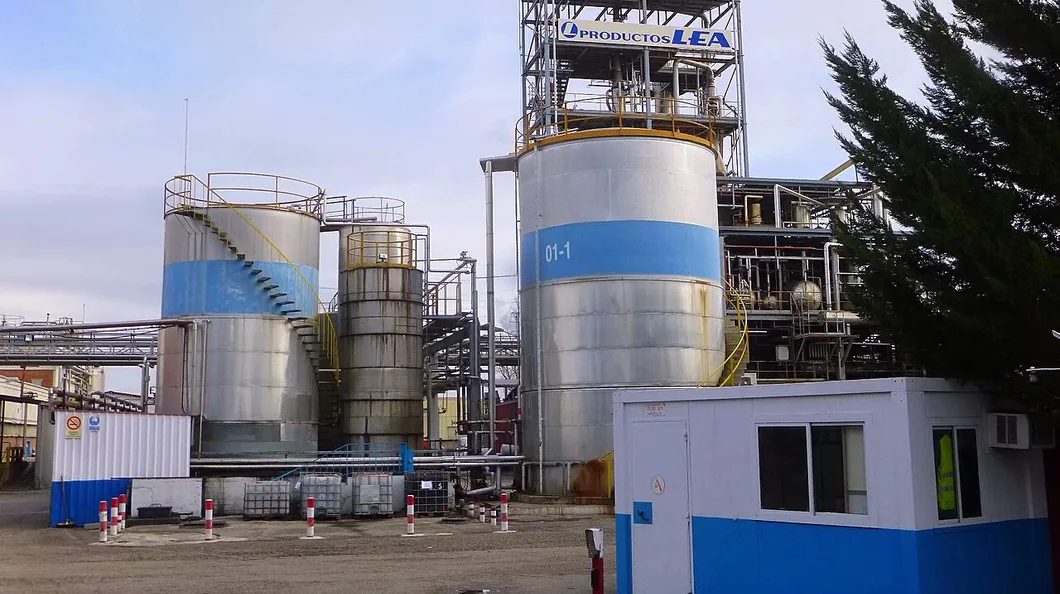
The table below shows the typical classification seen in this industry; the exact boundaries depend on the solvent, process temperature, ventilation and the amount of powder and are set in your site's explosion protection document. For the zone concepts in detail, see our article on Zone 0, 1, 2 and 20, 21, 22, and for choosing the class to suit the solvent, our article on how to choose the temperature class.
| Area | Typical zone | Note |
|---|---|---|
| Solvent tank interior | Zone 0 | Continuous explosive atmosphere; only Ga / category 1 equipment inside. |
| Solvent store (drums, IBCs) | Zone 1Zone 2 | Storage in closed containers is usually Zone 2; Zone 1 where containers are opened or decanted. |
| Around reactors and mixing vessels | Zone 1Zone 2 | Zone 1 near manways and sampling points, the rest of the room Zone 2 depending on ventilation. |
| Filling alcohol-based products (perfume, cologne, sanitiser) | Zone 1Zone 2 | Zone 1 around the filling nozzles, Zone 2 around the line. |
| Solvent recovery (distillation) | Zone 1Zone 2 | Depending on the distance to flanges, pumps and condensate points. |
| Fluid bed dryer and granulator interiors | Zone 20 | Zone 20 inside with dry powder; with solvent-based wet granulation the interior is also assessed as a gas zone. |
| Powder weighing and transfer, tablet presses | Zone 21Zone 22 | Zone 21 at open transfer points; Zone 22 around them with local extraction and cleaning. |
| Offices, switch room, control room | Safe area | Outside the hazardous area; clean-room overpressure does not ensure this by itself. |
Gases on site and the classes they need
Rule of thumb: most common solvents (ethanol, IPA, methanol, acetone) are covered by IIA, T2; a solvent such as diethyl ether needs IIB, T4. In granulation and drying, vapour and dust can be present together: there the equipment must carry both a gas (G) and a dust (D) marking.
Product groups for this industry
The links open each category with the Zone 1 + IIB filter; you can change the filter to suit your site.
Lighting
LED luminaires for solvent stores, filling rooms and production areas.
Zone 1IIB30 productsView products →Control stations
Start-stop and emergency stop stations for mixers, pumps and filling lines.
Zone 1IIB12 productsView products →Junction and distribution boxes
Ex d and Ex e terminal boxes for weighing and sensor connections.
Zone 1IIB17 productsView products →Cable glands
Glands certified for gas and dust, in nickel-plated brass or stainless steel.
Zone 1IIB7 productsView products →Conduit fittings
Sealing fittings, elbows and nipples for conduit systems.
Zone 1IIB12 productsView products →Plugs and sockets
Interlocked plug and socket sets for portable mixers and drum pumps.
Zone 1IIB7 productsView products →Frequently used in this industry


What to check when selecting
- The equipment category must suit the zone: at least 2 G (Gb) for Zone 1 and 3 G (Gc) for Zone 2; where powders are handled, also 2 D (Db) for Zone 21.
- The temperature class follows the solvent with the lowest ignition temperature; check the list again when a formulation changes (diethyl ether needs T4).
- Where vapour and dust occur together, in drying and granulation, choose equipment carrying both gas and dust markings.
- In areas that are washed often and wiped with disinfectants, prefer IP66, smooth housings resistant to cleaning chemicals.
- The gland must suit the enclosure (Ex d certified on Ex d, Ex e certified on Ex e); a certified blanking plug in every unused entry.
Frequently asked questions
Is the filling area for low-alcohol products also a hazardous area?
As the alcohol content of a water-alcohol mixture falls, its flash point rises. If the liquid is handled below its flash point and is not sprayed, no hazardous area may arise; the assessment is made in the explosion protection document.
What if solvent vapour and dust are present together?
This is called a hybrid mixture; it can ignite at a lower energy than the dust or the vapour alone. The equipment must carry both gas and dust markings and suit both zones.
Who classifies the zones?
The employer has an explosion protection document prepared under the ATEX workplace rules (Directive 1999/92/EC, in Türkiye the related regulation); the zone boundaries are set out in that document.
Sources
- Çalışanların Patlayıcı Ortamların Tehlikelerinden Korunması Hakkında Yönetmelik, Official Gazette 30.04.2013, No. 28633 (in Turkish)
- Directive 1999/92/EC, Annex I: Classification of places where explosive atmospheres may occur (legislation.gov.uk)
- Ministry of Labour and Social Security of Turkey, Implementation Guide on the Protection of Workers from the Hazards of Explosive Atmospheres (in Turkish)
- IEC 60079-10-1:2020, Classification of areas, Explosive gas atmospheres (IEC Webstore)
- IEC 60079-10-2:2026, Classification of areas, Explosive dust atmospheres (IEC Webstore)
- HSE, Hazardous Area Classification and Control of Ignition Sources
Share the zones, the solvents you use and the cable entries; we will send a quotation including luminaires, boxes, glands and blanking plugs.
This article is general information; your site's explosion protection document and the product certificate are decisive when selecting equipment.

 Home
 Products
 Whatsapp
 Sidebar
 Top