


At a glance
Which area is which zone?
The table below shows the typical classification seen in this industry; the exact boundaries depend on ventilation, gas detection and safety arrangements and release sources and are set in your site's explosion protection document. For the zone concepts in detail, see our article on Zone 0, 1, 2 and 20, 21, 22, and for why hydrogen is in the most demanding gas group, our article on minimum ignition energy.
| Area | Typical zone | Note |
|---|---|---|
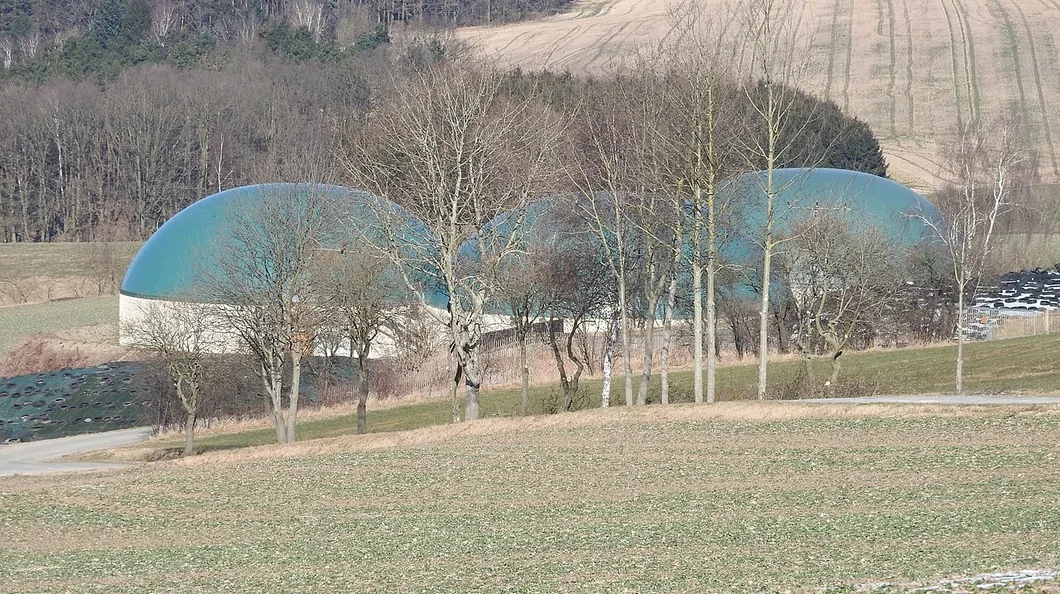
| Digester gas space | Zone 0Zone 1 | Mostly Zone 1 according to guidance, Zone 0 under some operating conditions; only suitable category equipment inside. |
| Gas holder, around pressure relief valves | Zone 1Zone 2 | Zone 1 between the membranes and close to the valve outlet; usually Zone 2 around the outside. |
| Gas treatment, drying, H₂S filter, blower room | Zone 1Zone 2 | Mostly Zone 2 in an enclosed room; Zone 1 near flanges and condensate drains. |
| CHP engine room | Zone 2Safe area | Around the gas train; with strong ventilation and gas detection often a limited Zone 2 or non-hazardous. |
| Wastewater inlet works, screen house, wet well | Zone 1Zone 2 | Methane and H₂S can accumulate; Zone 1 inside enclosed wells, Zone 2 around them. |
| Sludge thickening and dewatering building | Zone 2 | Depending on ventilation; enclosed sludge tanks can be classified more severely inside. |
| Battery room | Zone 2Safe area | With adequate ventilation the room is mostly non-hazardous; the space right next to the cells (EN IEC 62485-2 safety distance) is treated as hazardous. |
| Hydrogen electrolyser, compressor, dispenser | Zone 1Zone 2 | Zone 1 near vent outlets and connections, Zone 2 around them. |
Gases on site and the classes they need
Rule of thumb: in biogas and wastewater areas, IIB, T3 or better is enough for methane and H₂S. In hydrogen production, storage and fuelling areas and in battery rooms, choose equipment certified IIC or at least IIB+H2. H₂S attacks copper and brass, so corrosion-resistant materials for enclosures, glands and terminals matter.
Product groups for this industry
The links open each category with the Zone 1 + IIC filter; you can change the filter to suit your site.
Lighting
LED luminaires for gas treatment rooms, pumping stations and hydrogen areas; digester sight-glass lights.
Zone 1IIC25 productsView products →Control stations
Start-stop and emergency stop stations for pumps, mixers and blowers.
Zone 1IIC10 productsView products →Junction and distribution boxes
Terminal boxes for gas detector, level and flow meter connections.
Zone 1IIC14 productsView products →Cable glands
IIC certified glands and blanking plugs in nickel-plated brass or stainless steel.
Zone 1IIC7 productsView products →Conduit fittings
Sealing fittings, elbows, nipples and reducers for conduit systems.
Zone 1IIC11 productsView products →Other products
Local isolators (safety switches) beside pumps and fans and other accessories.
Zone 1IIC17 productsView products →Frequently used in this industry


What to check when selecting
- The equipment category must suit the zone: at least 2 G (Gb) for Zone 1, 3 G (Gc) for Zone 2 and only 1 G (Ga) inside Zone 0.
- Where hydrogen is present the gas group must be IIC or IIB+H2; IIB+H2 covers hydrogen but not acetylene or carbon disulphide.
- With H₂S and humidity, choose nickel-plated brass, stainless steel or suitably coated housings; bare brass and copper parts corrode quickly.
- Outdoors you need IP66, UV resistance and a certified ambient range (e.g. -40…+60 °C) that covers your winter and summer temperatures.
- In rooms where gas detection starts ventilation or cuts the power, equipment that keeps running after an alarm (fans, emergency lighting, warning beacons) must also be Ex.
Frequently asked questions
Is IIA not enough for biogas?
The main component of biogas, methane, is IIA, and the H₂S content of raw biogas is usually low. Where H₂S can accumulate, in sewers, wells and sludge areas, IIB is needed; the explosion protection document decides, and choosing IIB is usually the safe side.
Is a battery room a hazardous area?
Hydrogen is released during charging. Under EN IEC 62485-2, with adequate ventilation the room is generally non-hazardous; within the safety distance around the cells, Ex equipment is needed.
Who classifies the zones?
The employer has an explosion protection document prepared under the ATEX workplace rules (Directive 1999/92/EC, in Türkiye the related regulation); the zone boundaries are set out in that document.
Sources
- Çalışanların Patlayıcı Ortamların Tehlikelerinden Korunması Hakkında Yönetmelik, Official Gazette 30.04.2013, No. 28633 (in Turkish)
- Directive 1999/92/EC, Annex I: Classification of places where explosive atmospheres may occur (legislation.gov.uk)
- Ministry of Labour and Social Security of Turkey, Implementation Guide on the Protection of Workers from the Hazards of Explosive Atmospheres (in Turkish)
- IEC 60079-10-1:2020, Classification of areas, Explosive gas atmospheres (IEC Webstore)
- HSE, Hazardous Area Classification and Control of Ignition Sources
Share the zones, gas group and cable entries; we will send a quotation including luminaires, boxes, glands and blanking plugs.
This article is general information; your site's explosion protection document and the product certificate are decisive when selecting equipment.

 Home
 Products
 Whatsapp
 Sidebar
 Top