


At a glance
Which area is which zone?
The table below shows the typical classification seen in this industry; the exact boundaries depend on the amount of dust, layer build-up, extraction and housekeeping and are set in your site's explosion protection document. For the zone concepts in detail, see our article on Zone 0, 1, 2 and 20, 21, 22, and for how small a spark can ignite a dust cloud, our article on minimum ignition energy.
| Area | Typical zone | Note |
|---|---|---|
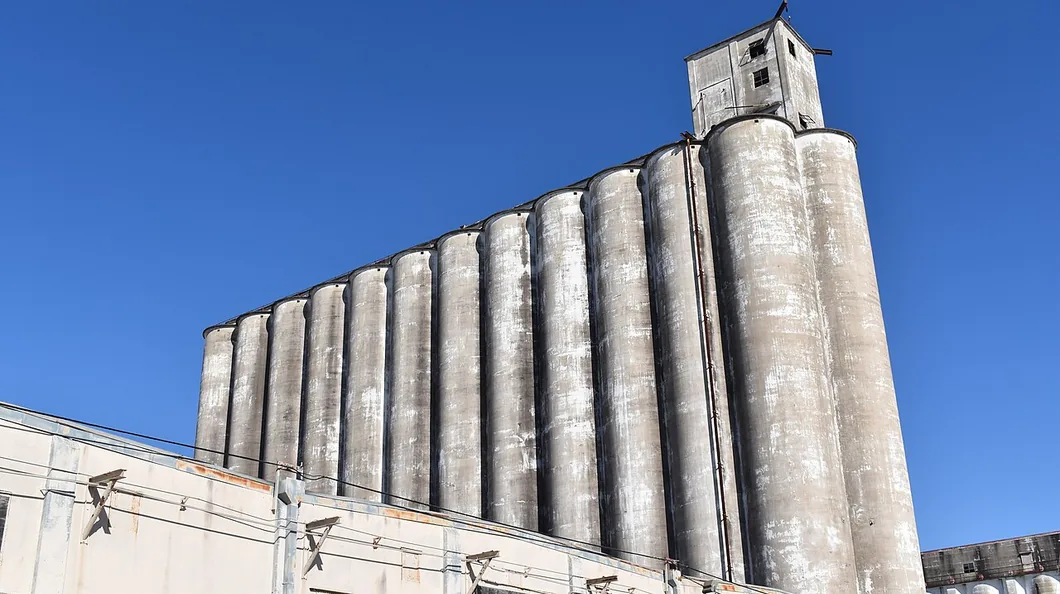
| Silo and bin interiors | Zone 20 | A dust cloud is present continuously or for long periods during filling and emptying. |
| Dust filter (dirty side) | Zone 20 | The clean side is usually Zone 22 or non-hazardous, depending on the filter's condition. |
| Bucket elevator interior | Zone 20Zone 22 | Zone 20 inside the casing; the area around the boot and head is usually Zone 22. |
| Mill, grinder and sifter interiors | Zone 20 | Fine dust and hot surfaces in the same place; tramp metal separation matters. |
| Bagging and big-bag filling | Zone 21Zone 22 | Zone 21 around the filling spout, the rest of the room mostly Zone 22. |
| Conveyor and screw transfer points | Zone 21Zone 22 | Zone 21 close to the transfer point; Zone 22 around it if cleaning is regular. |
| Bulk intake (tipping pit) | Zone 21Zone 22 | Dust clouds while trucks unload; around the grid and the pit. |
| Switch room and MCC room | Safe area | A separate room, sealed against dust and pressurised if needed. |
Dusts on site and the classes they need
Rule of thumb: for dust, read the equipment's maximum surface temperature (e.g. T80 °C) instead of a T class and compare it with the dust's ignition data. It must not exceed 2/3 of the dust cloud ignition temperature or the 5 mm layer ignition temperature minus 75 K; the lower of the two is the limit. Layers thicker than 5 mm lower the limit further.
Product groups for this industry
The links open each category with the Zone 21 filter; you can change the filter to suit your site.
Lighting
Dust-certified LED luminaires for silo tops, elevator towers and bagging halls.
Zone 2137 productsView products →Control stations
Start-stop and emergency stop stations at conveyors and elevators.
Zone 2112 productsView products →Junction and distribution boxes
IP6X boxes for sensor, level probe and motor connections.
Zone 2116 productsView products →Cable glands
Dust-certified (Ex tb) glands and blanking plugs that keep the enclosure IP6X.
Zone 2113 productsView products →Plugs and sockets
Interlocked plug and socket sets for cleaning machines and maintenance tools.
Zone 217 productsView products →Other products
Local isolators (safety switches) beside motors and other accessories.
Zone 2125 productsView products →Frequently used in this industry


What to check when selecting
- The dust category must suit the zone: 1 D (Da) for Zone 20, 2 D (Db) for Zone 21, 3 D (Dc) for Zone 22. Equipment with a gas marking (G) only is not used in a dust zone.
- The surface temperature in the marking (e.g. T80 °C) must be below the limit worked out from your dust's cloud and layer ignition temperatures; take the values from the dust test report or the explosion protection document.
- Equipment marked IIIC can also be used with IIIB and IIIA dusts; the reverse is not true.
- Glands and blanking plugs must also be dust-certified; a single unsuitable entry spoils the enclosure's IP6X dust tightness.
- Do not let dust build up on luminaires and boxes: regular cleaning, sloping tops and easy-to-wipe housings prevent layers from heating up and igniting.
Frequently asked questions
Can I use equipment made for Zone 22 in Zone 21?
No. Zone 21 needs at least category 2 D (Db). The other way round, Zone 21 equipment can be used in Zone 22.
Is a flameproof (Ex d) product for gas also safe in dust?
Not by itself. The product must also carry a dust marking (e.g. Ex tb IIIC T80 °C Db); that marking certifies the enclosure's dust tightness and surface temperature.
Who classifies the zones?
The employer has an explosion protection document prepared under the ATEX workplace rules (Directive 1999/92/EC, in Türkiye the related regulation); the zone boundaries and the dust's ignition data are set out in that document.
Sources
- Çalışanların Patlayıcı Ortamların Tehlikelerinden Korunması Hakkında Yönetmelik, Official Gazette 30.04.2013, No. 28633 (in Turkish)
- Directive 1999/92/EC, Annex I: Classification of places where explosive atmospheres may occur (legislation.gov.uk)
- Ministry of Labour and Social Security of Turkey, Implementation Guide on the Protection of Workers from the Hazards of Explosive Atmospheres (in Turkish)
- IEC 60079-10-2:2026, Classification of areas, Explosive dust atmospheres (IEC Webstore)
- HSE, Hazardous Area Classification and Control of Ignition Sources
Share the zones, dust type and cable entries; we will send a quotation including luminaires, boxes, glands and blanking plugs.
This article is general information; your site's explosion protection document and the product certificate are decisive when selecting equipment.
 Home
 Products
 Whatsapp
 Sidebar
 Top