


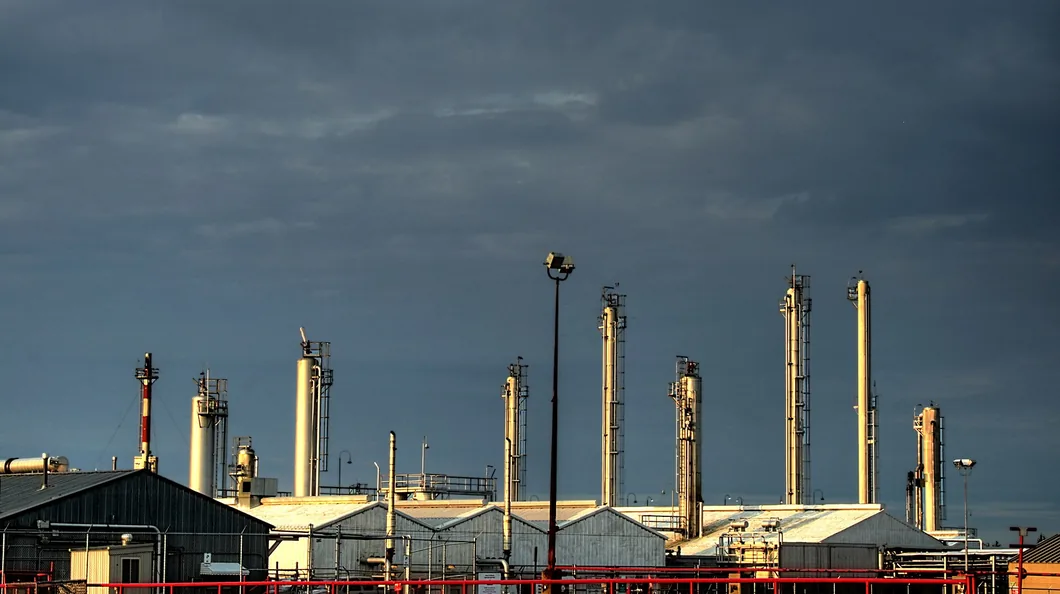
At a glance
Which area is which zone?
The table below shows the typical classification seen in this industry; the exact boundaries depend on the substances handled, ventilation and release sources and are set in your site's explosion protection document. For how the temperature class is chosen where several substances are present, see our article on how to choose the temperature class.
| Area | Typical zone | Note |
|---|---|---|
| Reactor and process tank interior (vapour space) | Zone 0 | Without inerting, usually a continuous explosive atmosphere. |
| Around reactor charging hatches and manholes | Zone 1Zone 2 | Zone 1 close to the opening when it is open, Zone 2 beyond. |
| Pumps, valves and flanges | Zone 1Zone 2 | Open, well-ventilated areas are usually Zone 2; near seals and in pits Zone 1. |
| Sampling points | Zone 1 | Vapour is released during sampling; the area around the point is usually Zone 1. |
| Drum / IBC filling and transfer station | Zone 1Zone 2 | Zone 1 around the filling nozzle, Zone 2 in the rest of the station. |
| Chemical warehouse (closed containers) | Zone 2 | Storage in closed containers is usually Zone 2; ventilation is decisive. |
| Hydrogen compressor, electrolysis unit | Zone 1Zone 2 | Ventilation is critical in enclosed buildings; equipment must be IIC. |
| Control room, MCC building | Safe area | Kept outside the hazardous area by pressurisation or distance. |
Gases on site and the classes they need
Rule of thumb: a plant handles several substances; the choice is set by the most demanding gas group together with the lowest ignition temperature. Where ethylene and solvents are present, IIB, T3 or better is usually enough; units with hydrogen or carbon disulphide need IIC and a temperature class to suit the substance (T6 for CS₂).
Product groups for this industry
The links open each category with the Zone 1 + IIB filter; you can change the filter to suit your site.
Lighting
LED floodlights and luminaires for process areas, warehouses and sampling points.
Zone 1IIB30 productsView products →Control stations
Start-stop and emergency stop stations for reactor agitators and pumps.
Zone 1IIB12 productsView products →Junction and distribution boxes
Ex d and Ex e terminal boxes for instrument and motor cables.
Zone 1IIB17 productsView products →Cable glands
IIC certified armoured / unarmoured glands, blanking plugs and reducers.
Zone 1IIB7 productsView products →Conduit fittings
Sealing fittings, elbows, nipples and couplings for conduit systems.
Zone 1IIB12 productsView products →Plugs and sockets
Interlocked plug and socket sets for portable pumps, mixers and maintenance tools.
Zone 1IIB7 productsView products →Frequently used in this industry


What to check when selecting
- The equipment category must suit the zone: at least 2 G (Gb) for Zone 1, 3 G (Gc) for Zone 2 and only 1 G (Ga) inside a reactor.
- Set the gas group and temperature class from the list of all substances in the area (safety data sheets), not from a single one.
- In hydrogen units the enclosure, glands and blanking plugs must all be IIC (or at least IIB+H2); a single IIB gland lowers the class of the whole installation.
- Check that the enclosure material and seals withstand acid, alkali and solvent vapours; choose stainless steel or GRP enclosures where needed.
- For equipment near hot process lines, make sure the upper limit of the certified ambient range (e.g. +60 °C) is not exceeded.
Frequently asked questions
There is only a little hydrogen on our site; do we still need IIC?
The required group depends on whether hydrogen can be present in that zone, not on the quantity. Use IIC (or IIB+H2) equipment where hydrogen can reach; IIB may be enough in areas without hydrogen.
How is the temperature class chosen for solvent mixtures?
Use the component with the lowest ignition temperature in the mixture. If in doubt, choosing a stricter class (e.g. T4 instead of T3) is on the safe side.
Who classifies the zones?
The employer has an explosion protection document prepared under the ATEX workplace rules (Directive 1999/92/EC, in Türkiye the related regulation); the zone boundaries are set out in that document.
Sources
- Çalışanların Patlayıcı Ortamların Tehlikelerinden Korunması Hakkında Yönetmelik, Official Gazette 30.04.2013, No. 28633 (in Turkish)
- Directive 1999/92/EC, Annex I: Classification of places where explosive atmospheres may occur (legislation.gov.uk)
- Ministry of Labour and Social Security of Turkey, Implementation Guide on the Protection of Workers from the Hazards of Explosive Atmospheres (in Turkish)
- IEC 60079-10-1:2020, Classification of areas, Explosive gas atmospheres (IEC Webstore)
- HSE, Hazardous Area Classification and Control of Ignition Sources
Share the zones, the substances you handle and the cable entries; we will send a quotation including luminaires, boxes, glands and blanking plugs.
This article is general information; your site's explosion protection document and the product certificate are decisive when selecting equipment.

 Home
 Products
 Whatsapp
 Sidebar
 Top